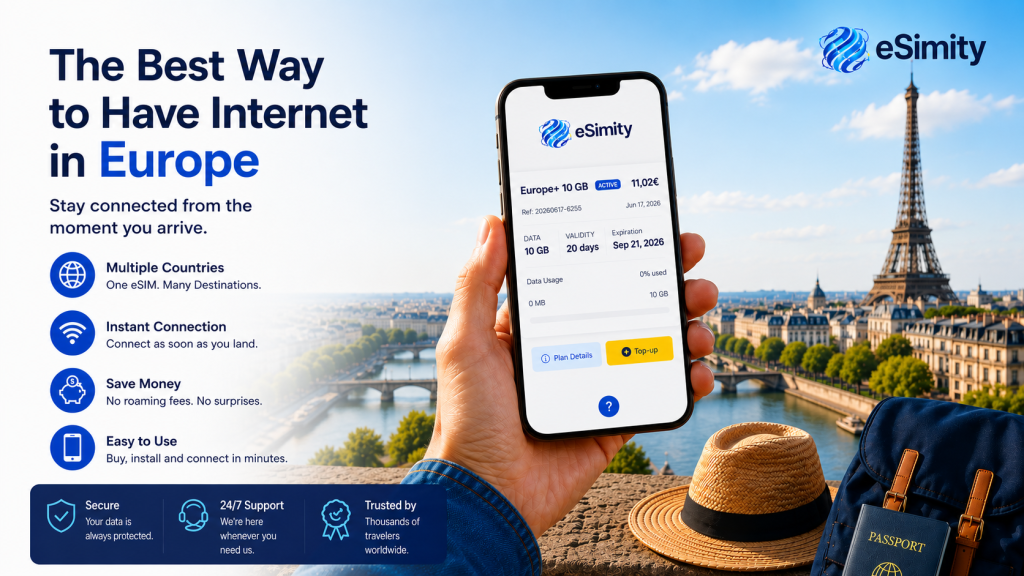
Planning a trip to Europe is exciting. Figuring out how you’ll stay connected once you arrive usually isn’t.
Many travelers only start thinking about mobile data after landing. That’s when they discover airport SIM kiosks with long queues, expensive roaming charges from their home provider, or confusing local plans they don’t fully understand.
The reality is simple: having reliable internet isn’t a luxury anymore. You rely on it to navigate unfamiliar streets, book transportation, check into hotels, translate menus, access banking apps, stay in touch with family, and share your experiences along the way.
For digital nomads and remote workers, the stakes are even higher. A weak connection can mean missed meetings, interrupted work, and unnecessary stress.
That’s why more travelers are choosing eSIM technology before they even board the plane.
If you’re wondering about the best way to have internet in Europe, an eSIM offers a faster, simpler alternative to traditional physical SIM cards. You can set everything up before departure and get online within minutes of arriving without swapping tiny plastic cards or hunting for a mobile store.
In this guide, you’ll learn why eSIMs are changing the way people travel, who benefits most from using them, and how to choose the right option for your next European adventure.
The Biggest Internet Problems Travelers Face in Europe
Staying connected should be one of the easiest parts of traveling. Yet for many visitors, finding reliable mobile internet quickly becomes an unexpected headache.
Before looking at solutions, it’s worth understanding the problems that travelers face most often.
Expensive Roaming Charges Can Ruin Your Budget
Many travelers assume they can simply use their home mobile plan abroad. Unfortunately, international roaming fees can add up fast.
A few days of using Google Maps, uploading photos, making video calls, and browsing the web can lead to surprisingly high bills once you return home.
Even when roaming packages are available, they often come with limited data allowances and higher costs compared to travel-focused options.
Buying a Local SIM After Landing Wastes Valuable Travel Time
After a long flight, the last thing most people want is to search for a mobile store.
Travelers often find themselves:
- Waiting in airport queues.
- Comparing unfamiliar plans.
- Dealing with language barriers.
- Searching for stores with compatible SIM cards.
- Spending the first hours of their trip trying to get online.
Instead of enjoying their destination, they lose valuable time solving a problem that could have been handled before departure.
Switching SIM Cards Means Losing Convenience
Traditional SIM cards aren’t designed for modern travelers.
Removing your existing SIM card can be frustrating, especially if you don’t want to risk losing it during your trip. In some cases, switching SIMs may interrupt access to services linked to your regular number.
For people who depend on messaging apps, banking notifications, ride-sharing services, or two-factor authentication, staying connected without disrupting their everyday setup is essential.
The truth is that travelers today expect convenience. They want internet access that works immediately, without extra steps or unnecessary complications.
Why eSIM Is the Best Way to Have Internet in Europe
Travelers today want simplicity. They don’t want to think about mobile data once their trip begins.
That’s exactly why eSIM has become the preferred choice for people visiting Europe.
If you’re looking for the best way to have internet in Europe, an eSIM removes many of the frustrations associated with traditional SIM cards and gives you more control over how and when you connect.
Activate Your Data Plan Before Departure
One of the biggest advantages of an eSIM is preparation.
Instead of waiting until you arrive, you can purchase your plan online, install it on your phone, and have everything ready before your flight.
That means no searching for mobile stores, no comparing unfamiliar offers at the airport, and no wasting precious travel time.
When you land, you’re already connected.
Stay Connected the Moment You Arrive
Whether you’re ordering a ride from the airport, checking directions to your hotel, or messaging family that you’ve arrived safely, having internet immediately makes a huge difference.
With an eSIM, activation usually takes just a few minutes.
You avoid the stress of finding Wi-Fi or relying on expensive roaming while trying to get your bearings in a new country.
Keep Your Existing Number While Using Mobile Data
Many travelers worry about losing access to their regular number.
The good news is that most modern smartphones allow you to use your home SIM alongside your eSIM.
This means you can:
- Continue receiving calls and text messages on your primary number.
- Keep access to banking verification codes.
- Use messaging apps without interruption.
- Enjoy mobile data through your travel plan at the same time.
It’s the convenience of having two connections working together.
Travel Across Multiple Countries With One Setup
Europe is rarely a one-country trip.
You might start in London, spend a few days in Paris, continue to Barcelona, and finish your journey in Rome.
With the right Europe data SIM card solution, you don’t need to buy a new plan every time you cross a border.
A single eSIM can provide coverage across multiple destinations, making it ideal for:
- Backpackers exploring several countries.
- Families on multi-city vacations.
- Business travelers attending meetings across Europe.
- Digital nomads moving between destinations.
Instead of managing multiple SIM cards, you get one simple setup that travels with you.
If you already know which countries you’re planning to visit, exploring travel plans before departure can help you avoid roaming surprises and save valuable time once your trip begins
eSIM vs Physical SIM Cards: Which Is Better for Travelers?
For years, buying a physical SIM card was the standard way to get mobile data abroad.
Today, travelers have another option.
Both solutions can help you get online, but they offer very different experiences. The right choice depends on how much convenience, flexibility, and time you value during your trip.
Convenience and Instant Activation
Physical SIM cards:
- Need to be purchased in person or delivered in advance.
- Often require swapping out your existing SIM.
- May involve visiting a mobile store after arrival.
- Can take time to set up.
eSIMs:
- Can be purchased online in minutes.
- Are installed digitally without opening your phone.
- Can be activated before you travel.
- Let you connect shortly after landing.
For travelers who prefer a smooth experience, eSIMs eliminate several unnecessary steps.
Cost Comparison
Many people assume physical SIM cards are always cheaper.
In reality, the total cost often includes more than the price of the plan itself.
With traditional SIMs, you may spend extra time traveling to a store, comparing offers, or paying airport premiums.
Travel eSIM plans are designed specifically for visitors and often provide transparent pricing upfront.
If you’re searching for the best esim for international travel Europe, it’s worth comparing not only the price, but also the convenience and flexibility included.
Multi-Country Flexibility
A physical SIM purchased in one country may not always be the best option once you move to another destination.
This can become frustrating if your itinerary includes several stops.
eSIM plans designed for Europe often allow you to use the same setup across multiple countries, helping you avoid repeated purchases and activations.
This makes them particularly useful for:
- Interrail travelers.
- Multi-city vacations.
- Business trips across Europe.
- Long-term travelers and digital nomads.
Security and Reliability
Physical SIM cards are small and easy to misplace.
Removing your home SIM also creates the risk of losing it while traveling.
Because eSIMs are built directly into compatible devices, there’s no tiny card to keep track of.
You can keep your primary SIM in place while using travel data, reducing disruption and giving you one less thing to worry about.
At the end of the day, both options can provide internet access. But for travelers who value speed, simplicity, and flexibility, eSIMs offer a more modern approach to staying connected abroad.
What Type of Travelers Benefit Most From eSIM?
eSIM technology isn’t designed for one specific type of traveler.
Whether you’re planning a short city break or spending months working from different countries, staying connected has become an essential part of the travel experience.
Here are the travelers who benefit the most from using an eSIM.
Vacation Travelers
Most tourists want one thing: to enjoy their trip without unnecessary stress.
They rely on mobile data to:
- Navigate unfamiliar cities.
- Access boarding passes and hotel reservations.
- Find restaurants and attractions.
- Use translation apps.
- Share photos and stay in touch with loved ones.
Instead of spending the first day looking for a SIM card shop, vacation travelers can arrive with everything already set up.
Digital Nomads
For digital nomads, internet access isn’t just convenient it’s critical.
Reliable connectivity supports:
- Video meetings with clients and teams.
- Cloud-based work.
- File uploads and downloads.
- Managing online businesses.
- Staying productive while moving between destinations.
An eSIM allows remote workers to focus on their work and travel plans rather than constantly managing local mobile services.
Business Travelers
Business trips often involve tight schedules and little room for delays.
Professionals need immediate access to:
- Email and messaging platforms.
- Calendar invitations.
- Navigation services.
- Ride-hailing apps.
- Company systems and collaboration tools.
With an eSIM, they can stay connected from the moment they land and continue working without interruption.
Students Studying Abroad
Students relocating temporarily to another country often face the challenge of adapting to a new environment quickly.
Having mobile data helps them:
- Communicate with family and friends.
- Navigate public transportation.
- Access university information.
- Manage finances through banking apps.
- Build their social life in a new city.
An eSIM provides flexibility without requiring a long-term mobile contract.
Families Traveling Together
When traveling with children, convenience matters more than ever.
Parents use mobile data to:
- Coordinate plans.
- Access entertainment during transit.
- Book activities.
- Find nearby services.
- Handle unexpected changes to itineraries.
Setting up connectivity before departure means one less task to worry about during the trip.
No matter how you travel, the goal is usually the same: spend less time solving connectivity problems and more time enjoying the experience. eSIM helps make that possible.
Frequently Asked Questions About Using eSIM in Europe
Can I use one eSIM across multiple European countries?
Yes. Many Europe travel eSIM plans are designed to work across multiple destinations, allowing you to move between countries without changing SIM cards every time you cross a border. However, coverage varies by provider, so it’s always a good idea to review the list of supported countries before purchasing your plan.
Will WhatsApp still work if I use an eSIM?
Yes. WhatsApp is linked to your phone number rather than the SIM card you use for mobile data. This means you can continue sending messages, making voice and video calls, and sharing photos exactly as you normally would while using an eSIM during your trip.
Can I keep my home SIM active while using an eSIM?
In most cases, yes. Many modern smartphones support dual SIM functionality, allowing you to use your regular SIM and an eSIM at the same time.
This means you can:
- Continue receiving calls and text messages on your primary number.
- Access banking verification codes and two-factor authentication messages.
- Keep using services linked to your regular number.
- Use your travel eSIM for mobile data throughout your trip.
This setup provides the convenience of staying connected without disrupting your usual mobile experience.
Is eSIM safe to use?
Yes. Because an eSIM is built directly into your device, there’s no physical card that can be lost, damaged, or accidentally misplaced while traveling.
As with any mobile service, it’s important to purchase your plan from a reputable provider and carefully follow the installation instructions provided. Choosing a trusted eSIM provider helps ensure a secure and reliable experience throughout your journey.
Can I install my eSIM before my trip starts?
Absolutely. In fact, many travelers prefer to install their eSIM before departure so everything is ready in advance.
Once you’ve purchased your plan, you can usually complete the installation process in just a few minutes by following the provider’s instructions. Just be sure to understand when your plan activates, as some eSIMs begin immediately after installation while others activate once you connect to a supported network at your destination.
Preparing ahead of time allows you to arrive connected and focus on enjoying your trip from the moment you land.
The Smartest Way to Stay Connected While Traveling
Travel should be about discovering new places, creating memories, and enjoying experiences you can’t have at home.
It shouldn’t start with searching for a SIM card kiosk, comparing unfamiliar mobile plans, or worrying about unexpected roaming charges.
Choosing an eSIM before departure means you can arrive connected, keep your existing number, and focus on enjoying Europe instead of solving connectivity problems.
If you’re planning a trip and looking for the best way to have internet in Europe, an eSIM can simplify the entire experience.
Ready to Stay Connected Across Europe?
Skip the airport SIM queues and avoid unexpected roaming charges.
Choose your Europe eSIM before departure and enjoy seamless connectivity from the moment you land.